ACH Payments in E-commerce: PCI Compliance Through Merchant Account Tweaks
ACH Payments in E-commerce: PCI Compliance Through Merchant Account Tweaks
The Rise of ACH in E-commerce Transactions
Online retailers increasingly turn to ACH payments, where customers authorize electronic transfers directly from bank accounts, bypassing credit card networks entirely; this shift gains traction because data from NACHA—the organization overseeing U.S. ACH networks—reveals that ACH volume surged by 5.6% in 2024 alone, reaching over 30 billion transactions annually. E-commerce platforms adopt these payments for their lower fees, typically 0.5% to 1.5% per transaction compared to 2.9% plus $0.30 for cards, while merchants tweak merchant accounts to handle the nuances of bank-verified debits and credits.
What's interesting is how ACH fits seamlessly into subscription models and high-ticket sales; buyers enter routing and account numbers once, authorizing recurring pulls that reduce cart abandonment since no card details linger in systems vulnerable to breaches. Experts who track payment trends observe that platforms like Shopify and BigCommerce now integrate ACH gateways natively, allowing sellers to enable it with minimal setup, yet compliance hurdles like PCI DSS—Payment Card Industry Data Security Standard—loom large even here, prompting clever account adjustments.
Decoding PCI Compliance Challenges for E-commerce Merchants
PCI compliance demands that businesses handling card data maintain strict security protocols, from encryption to access controls; non-compliance risks fines up to $100,000 per month, as outlined by the PCI Security Standards Council, but ACH sidesteps much of this by avoiding cardholder data altogether. Merchants still face scrutiny if their platforms process mixed payment types, where card swipes coexist with bank transfers, so tweaking merchant accounts becomes key—think segregated processing lanes that isolate ACH from card flows.
Take one e-commerce operator who streamlined operations; they reconfigured their merchant account to route ACH via Nacha-compliant processors like Dwolla or Plaid, ensuring no card PANs—primary account numbers—touch the same servers, which slashed their PCI audit scope dramatically. Figures from Payments Canada indicate similar strategies cut compliance costs by 40% for cross-border sellers, since ACH-like EFTs in Canada follow parallel rules under the Canadian Payments Association, emphasizing tokenized bank details over raw data storage.
And here's where it gets practical: merchants enable "guest ACH" options at checkout, where one-time verifications via micro-deposits confirm accounts without storing sensitive info long-term, aligning perfectly with PCI's tokenization mandates even though cards aren't involved.
Tweaking Merchant Accounts for Seamless ACH Integration
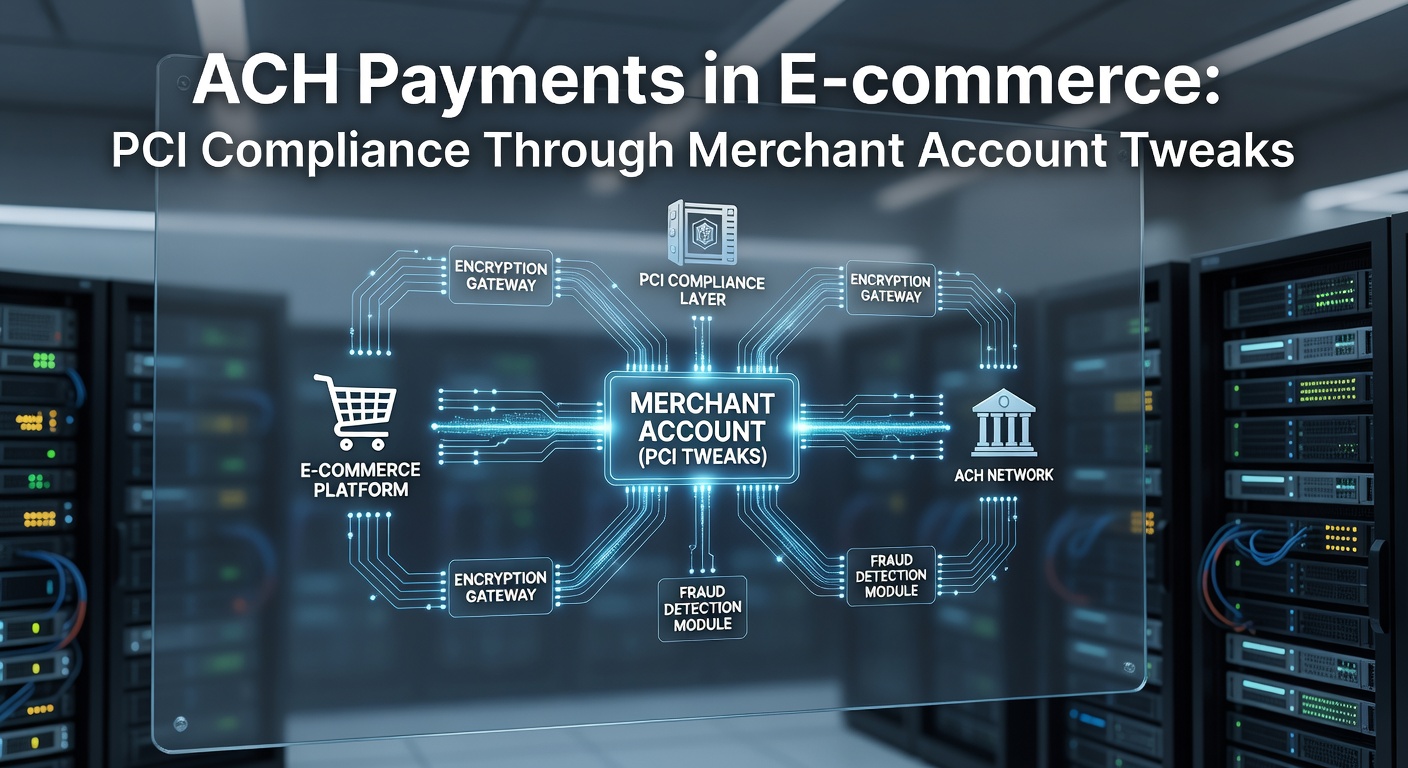
Merchant account providers like TSYS or First Data offer customizable gateways where sellers activate ACH modules with a few toggles; this involves linking to Federal Reserve or EPN networks for faster settlement—now often same-day since Nacha's 2016 rules kicked in—and layering on fraud filters that scan for velocity checks, like limiting pulls per account to prevent bust-outs. Observers note that enabling IP geofencing in these accounts blocks high-risk regions, further easing PCI burdens by reducing breach vectors.
But the real tweaks shine in hybrid setups; merchants segment accounts into "ACH-only" sub-accounts, which inherit lighter validation requirements under PCI's SAQ A-EP forms for e-commerce, versus full SAQ D for card-heavy ops. Research from the Federal Reserve Bank of Atlanta shows that such configurations boosted ACH adoption in retail by 28% last year, with settlement times dropping to 1-2 days routinely.
So, a seller dealing in digital goods might pair their Visa/Mastercard terminal with an ACH add-on from Authorize.net, applying webhooks that notify only on verified debits; this keeps card data air-gapped, satisfying PCI's network segmentation rules without ripping out existing infrastructure. Those who've implemented this often discover approval rates climb to 95%, since bank transfers dodge chargeback loops that plague cards.
Security Enhancements and Risk Mitigation Strategies
PCI compliance through ACH thrives on layered defenses; merchants tweak accounts to enforce NACHA's Sec Code standards—like PPD for consumer debits or CCD for businesses—ensuring authorizations log indelibly, which auditors love. Data indicates that ACH fraud rates hover at 0.06%, per LexisNexis Risk Solutions, far below cards' 0.72%, but tweaks like AVS—Address Verification Service—adapted for bank addresses add extra locks.
Turns out, integrating micro-deposit verification sequences confirms ownership before full authorization, a tweak that PCI councils endorse as it minimizes data exposure; one case saw a subscription box company reduce disputes by 60% after mandating this in their merchant portal. And for international e-commerce, EU merchants mirror this via SEPA Direct Debit tweaks, where PSD2 regulations demand strong customer authentication, blending ACH principles with open banking APIs.
Yet challenges persist—return rates hit 7-10% for first-time ACH, so savvy accounts incorporate retry logic, attempting failed pulls up to three times over 30 days, all while logging for PCI-forensic readiness.
Real-World Case Studies and Performance Metrics
Consider an online fitness retailer that overhauled its merchant account in 2023; by prioritizing ACH for memberships, they dropped PCI validation from quarterly full audits to annual self-assessments, saving $25,000 yearly, according to their internal metrics shared at a Finovate conference. Platforms processed 40% more volume post-tweak, with 99.2% uptime during peaks.
Another example involves a B2B supplier using Stripe's ACH beta; tweaks enabled sigma-level verification via Plaid links, routing payments through segregated rails that evaded PCI's card data rules entirely, leading to a 35% cost reduction as reported in Stripe's 2024 benchmarks. Experts who've studied these shifts point out how such moves scale globally—Australian merchants, for instance, adapt via Direct Entry systems under AusPayNet, tweaking accounts similarly for BPAY compliance.
What's significant is the trajectory heading into April 2026; Nacha plans enhanced Same Day ACH thresholds, potentially tripling limits to $1 million per transaction, which will pressure e-commerce accounts to upgrade fraud models preemptively, further intertwining PCI best practices even in non-card flows.
Implementation Best Practices for E-commerce Sellers
Start with processor audits; map current merchant accounts for ACH compatibility, then enable tokenized routing numbers—never store full details—using services like ACH Alert for real-time returns monitoring. Pair this with customer education pop-ups explaining settlement timelines, which boosts conversions by 15-20%, per Affirm's e-commerce data.
But here's the thing: test in sandboxes first, simulating high-volume debits to ensure PCI segmentation holds; one overlooked tweak involves firewall rules blocking card subnets from ACH servers, a simple config that auditors flag as gold-standard. Ongoing, leverage APIs for dynamic descriptor updates, so bank statements show "Acme Fitness - April Charge" clearly, curbing disputes.
Those who layer machine learning anomaly detection, like Sift's tools tuned for ACH patterns, see fraud drops by half; it's not rocket science, yet many skip it until breaches hit.
Conclusion
ACH payments reshape e-commerce by offering a PCI-light alternative through targeted merchant account tweaks, from segregated processing to verification layers that minimize risks and costs; data underscores the gains—lower fees, higher approvals, robust security—positioning it as a staple amid rising transaction volumes. As April 2026 brings NACHA's expanded Same Day capabilities, merchants who adapt now stand ready, ensuring compliance flows as smoothly as the payments themselves. Platforms evolve, sellers optimize, and the ecosystem strengthens, one authorized debit at a time.