Aligning Financial Networks with Online Retail Systems for Compliant Automated Billing Cycles
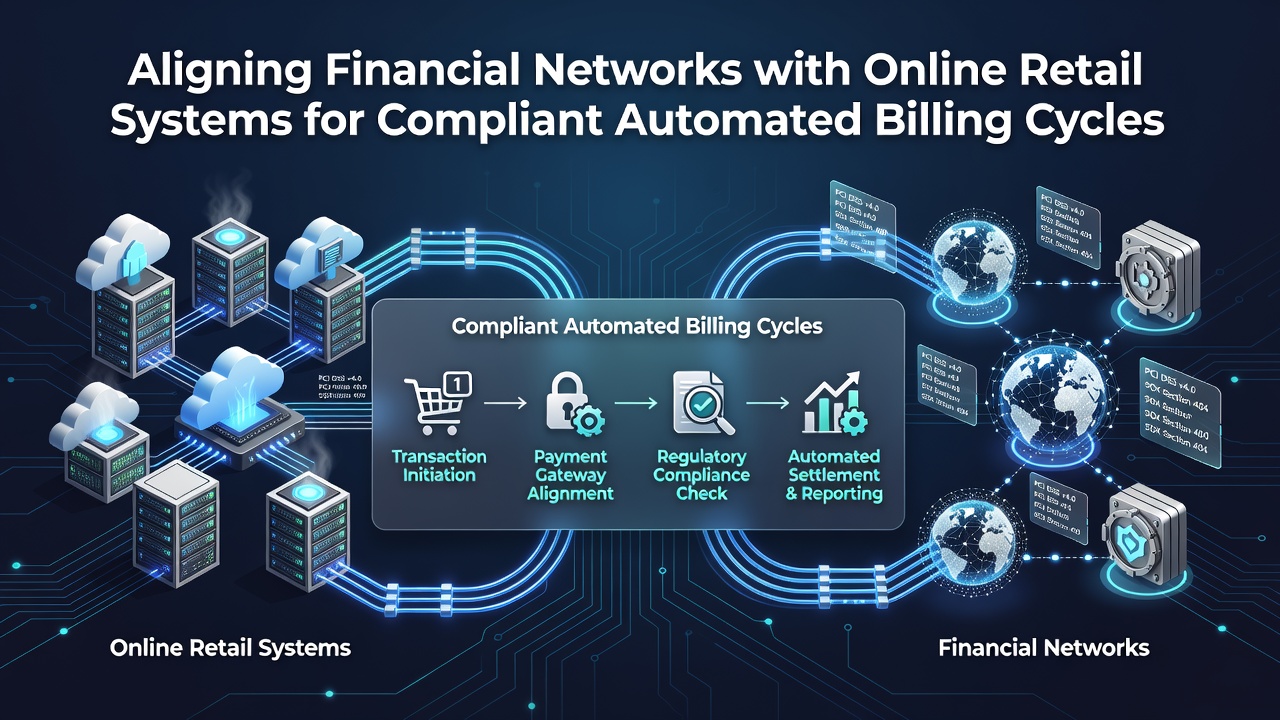
Retail platforms now rely on direct connections to banking infrastructure to manage recurring charges while meeting regulatory standards for timing, disclosure, and transaction security. These alignments require coordinated data flows between settlement systems and checkout interfaces so that automated deductions occur on schedule without violating consumer protection rules or network operating procedures.
Core Components of Network and Platform Integration
Financial institutions transmit account verification signals through standardized messaging protocols that retail systems interpret in real time, allowing billing cycles to trigger only after authorization sequences complete. This setup reduces mismatches between expected payment dates and actual processing windows, particularly when merchants operate across multiple time zones or jurisdictions.
Observers note that synchronization often centers on application programming interfaces that pull balance and status information directly from core banking ledgers. Retail software then adjusts charge attempts according to predefined calendar rules, ensuring deductions align with customer consent periods rather than arbitrary system clocks.
Regulatory Timelines and June 2026 Updates
By June 2026 several jurisdictions implemented revised guidelines requiring clearer notice intervals before recurring charges post. These rules emphasize that platforms must confirm customer account details through the originating financial network within a set window prior to each billing event. Integration teams therefore embed verification calls into automated workflows so that any change in account status surfaces before funds move.
Data from the Federal Reserve shows increased adoption of ISO 20022 messaging formats among U.S. operators during this period, enabling richer remittance information to travel alongside payment instructions. Retail systems that ingest these enhanced messages can automatically reconcile billing records against incoming settlement reports without manual intervention.
Technical Mechanisms Supporting Compliance
Secure token exchanges replace raw account credentials at the point of initial customer onboarding, after which the retail platform stores only reference identifiers. When a billing cycle arrives the system routes a request through the financial network using the stored token, triggering a fresh authorization that satisfies both network rules and disclosure requirements.

Batch scheduling engines within retail platforms now incorporate network-imposed cut-off times so that submission queues respect daily settlement calendars. This prevents charges from queuing during maintenance windows or regulatory hold periods that some institutions publish in advance. Those who studied these patterns report fewer failed transactions once cut-off logic resides inside the same orchestration layer that manages customer notifications.
Cross-Border Considerations in Automated Flows
Merchants serving international customers must map local banking holidays and reporting deadlines into their billing calendars. Alignment here involves pulling holiday calendars directly from participating central banks so that charge attempts skip dates when receiving networks cannot process instructions. Research published by the Bank for International Settlements outlines how such calendar feeds reduce exception handling volumes across regions.
Platforms also route currency conversion through the same financial channels used for settlement, ensuring that exchange rates applied at billing time match the rates used for final clearing. This single-source approach limits discrepancies that otherwise require post-cycle adjustments and additional customer communications.
Data Reconciliation and Audit Trails
Every automated deduction generates paired records: one inside the retail order management system adn one inside the financial network's transaction log. Reconciliation routines compare these records at the close of each settlement day, flagging any timing or amount variances for review. Audit logs retain both the authorization timestamp from the network and the notification timestamp sent to the customer, satisfying requirements for demonstrable compliance.
Those managing large subscription volumes often configure exception queues that route mismatched records to compliance teams before funds reverse or reattempt. This workflow keeps the primary billing engine uninterrupted while still meeting documentation standards.
Conclusion
Alignment between financial networks and online retail systems rests on shared messaging standards, synchronized calendars, and token-based verification that together support compliant automated billing. As of June 2026 these connections continue to evolve through updated regulatory timelines and richer data protocols that reduce processing exceptions. Retail operators who maintain direct, standards-compliant links to banking infrastructure position their recurring revenue streams to operate within established compliance boundaries without introducing additional manual layers.