Examining Tokenization Strategies for Scaling Secure ACH and Credit Card Flows in US Subscription Platforms
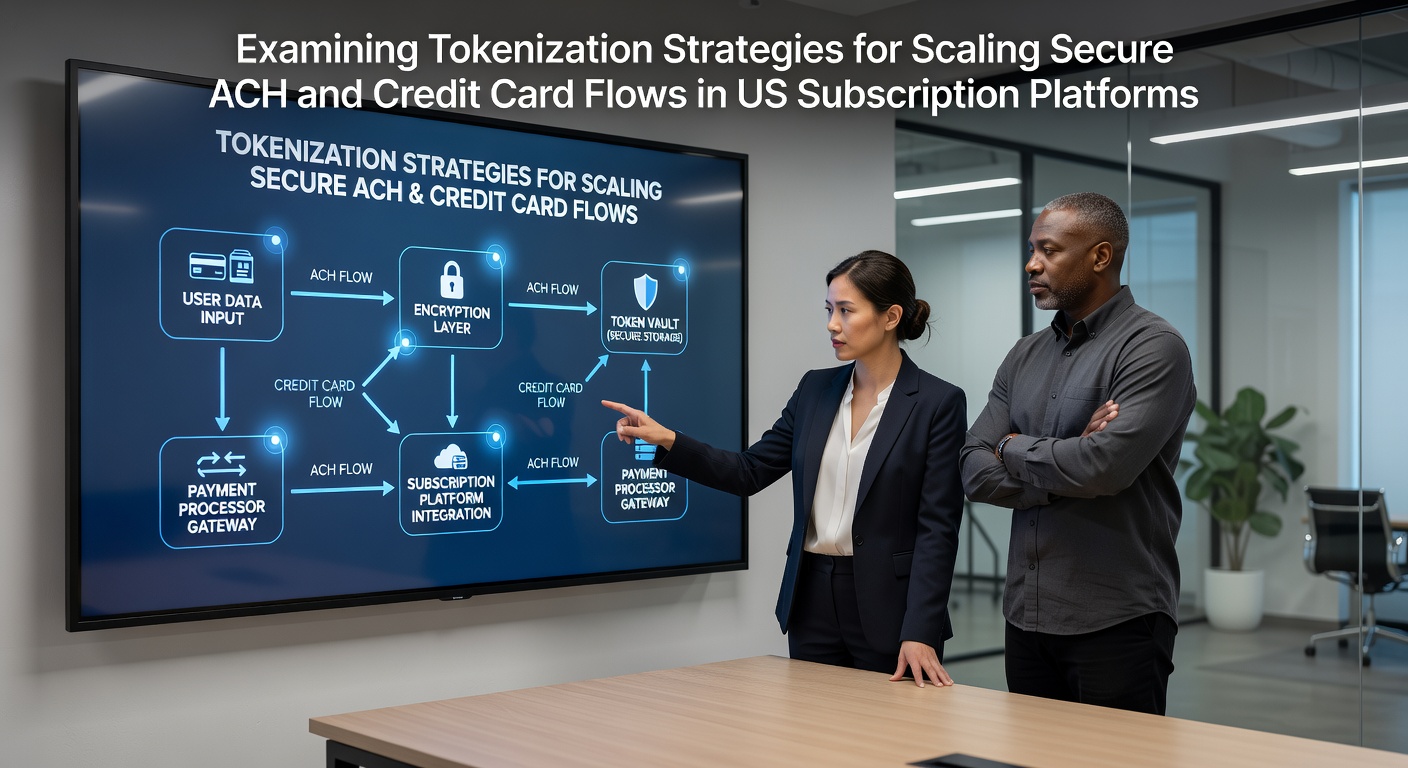
Subscription platforms across the United States continue to expand their payment infrastructure to handle growing volumes of recurring transactions, and tokenization has emerged as a core technique that replaces sensitive account details with non-sensitive identifiers. This approach reduces exposure during storage and transmission while supporting both credit card and ACH processing through unified systems. Researchers at institutions such as the Massachusetts Institute of Technology have documented how tokenization layers integrate with existing gateways to maintain authorization efficiency as subscriber counts rise into the millions.
Core Mechanics of Tokenization for Recurring Payments
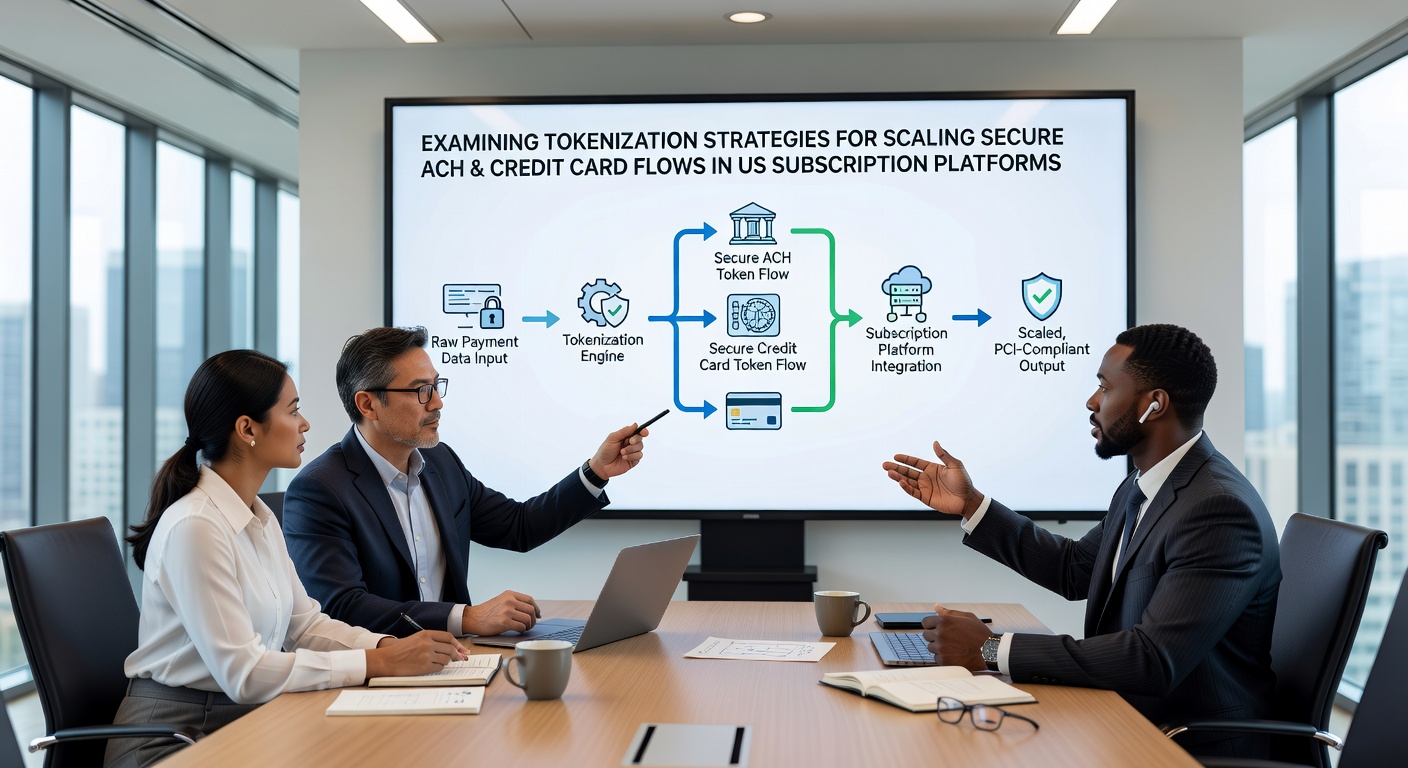
Tokenization begins when a customer enters payment credentials during initial signup, at which point the processor generates a unique token that maps back to the original data held in a secure vault. Credit card networks including Visa and Mastercard have standardized network tokens that embed expiration and cryptogram updates directly, allowing platforms to refresh details without recontacting the cardholder. ACH flows follow a parallel path where bank routing and account numbers convert into tokens compliant with NACHA operating rules, and these identifiers persist across billing cycles without repeated exposure of raw data.
Platforms that scale beyond a few thousand subscribers typically deploy token vaults either on-premises or through third-party providers, and the choice affects latency during high-volume batch processing. Data from the Federal Reserve Bank of New York indicates that tokenized ACH transactions now represent a growing share of automated clearing house volume, particularly in subscription sectors such as software-as-a-service and digital media.
Strategies That Support Credit Card Scaling
One widely adopted method involves issuer-generated network tokens that update dynamically when cards are reissued or expire, and this reduces involuntary churn that otherwise occurs when stored credentials become invalid. Subscription services integrate these tokens through APIs that trigger updates in real time, while maintaining PCI DSS scope reduction because the actual card numbers never reside on the merchant environment after initial capture. Observers note that merchants who adopt this method report smoother handling of international cardholders whose issuing banks participate in tokenization programs.
Another layer includes domain-specific tokens that bind the identifier to a particular merchant or use case, limiting the risk if one token is compromised. As volumes increase, platforms combine these with velocity checks and machine-learning models that score each recurring attempt, yet the token itself remains the persistent element that enables uninterrupted billing cycles through May 2026 and beyond.
Approaches Tailored to ACH Tokenization
ACH tokenization requires alignment with NACHA guidelines that govern authorization and risk management for electronic debits, and several processors now offer tokenized bank account references that support both one-time and recurring collections. These tokens allow platforms to initiate debits through the same API endpoints used for credit cards, simplifying codebases and reducing operational overhead during rapid subscriber growth. Because ACH transactions settle in batches, the token strategy also incorporates timing controls that schedule debits on optimal days to improve success rates.
Studies conducted by the University of Michigan Center for Financial Research have examined how tokenized ACH flows integrate fraud detection signals such as account age and prior return codes, enabling platforms to segment customers into risk tiers before each billing run. This segmentation supports higher approval percentages while keeping unauthorized returns below NACHA thresholds that could trigger fines.
Operational Considerations for Platform Growth
When subscriber bases expand rapidly, latency and reliability become critical, and tokenization strategies that include redundant vault locations help maintain uptime during regional outages. Many platforms employ hybrid models that store a subset of tokens in multiple geographic regions while routing requests through intelligent load balancers. This architecture supports A/B testing of different token formats to determine which combinations yield the highest authorization rates for both card and ACH traffic.
Compliance teams also track evolving standards from the PCI Security Standards Council, ensuring that any new tokenization implementation continues to qualify for reduced assessment scope. As of May 2026, updates to token lifecycle management protocols are scheduled to take effect, requiring platforms to rotate certain token keys on defined intervals to further limit long-term exposure.
Integration Patterns Observed in Production Environments
Take one large subscription service that migrated its legacy card vault to a network token system in 2024, after which recurring success rates improved because expired cards were refreshed automatically by the networks. The same platform later extended tokenization to its ACH channel, and the unified dashboard allowed operations staff to monitor both payment types through consistent metrics. Another example involves a regional media company that adopted domain-specific tokens for its ACH subscriptions, and this binding prevented tokens issued for one service from being misused on another product line within the same corporate family.
These cases illustrate how tokenization serves as the connective tissue between security requirements and operational scale, rather than an isolated add-on feature.
Conclusion
Tokenization strategies continue to evolve in response to both technological advances and regulatory expectations, and US subscription platforms that implement them effectively gain the ability to process larger volumes of credit card and ACH transactions with reduced risk. The combination of network tokens for cards and NACHA-compliant tokens for bank accounts creates a consistent foundation that supports growth while preserving compliance posture. As transaction patterns shift through 2026, ongoing refinement of these approaches remains central to maintaining secure and scalable payment flows.