How Encrypted Data Pathways Between Banks and Inventory Platforms Support Secure Cyclical Billings in American Retail Supply Chains
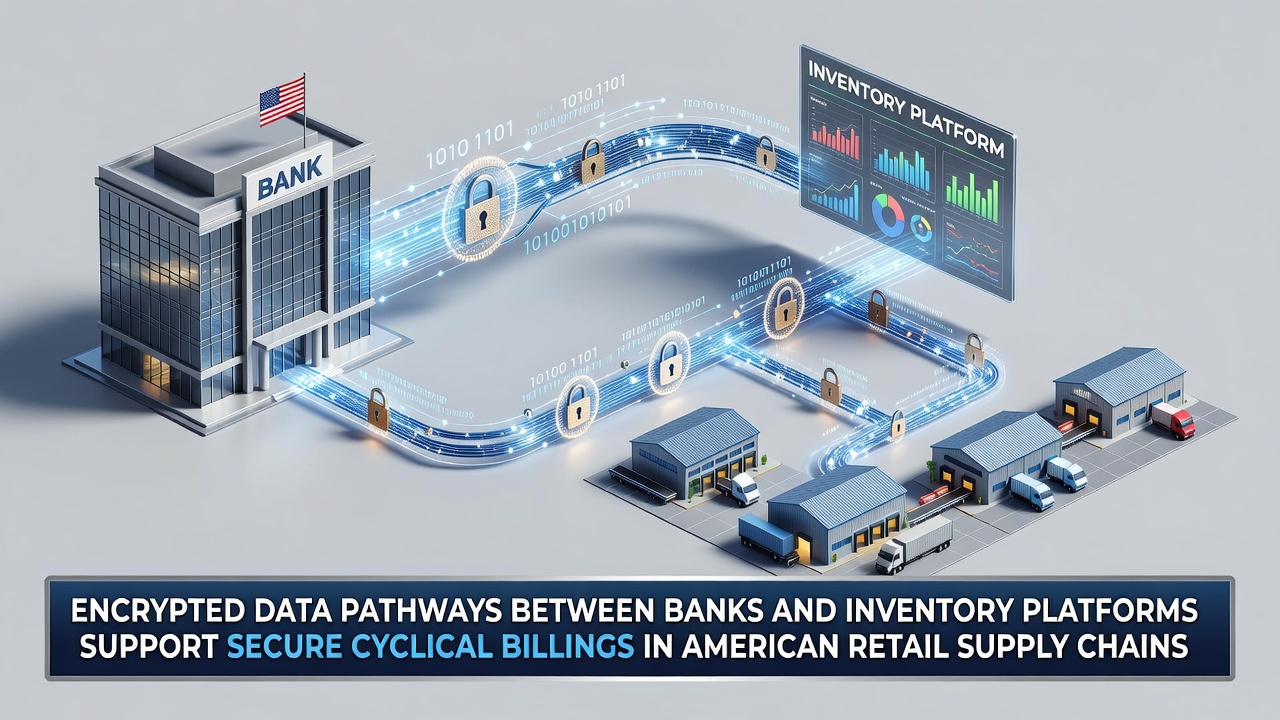
Data flows through encrypted channels connect banking institutions directly with inventory management platforms, and these pathways enable retailers to process recurring payments for stock replenishment without exposing sensitive details. American supply chains rely on such integrations to handle cyclical billings that align supplier invoices with real-time inventory levels, and the setup reduces manual intervention while maintaining compliance with financial regulations.
Encryption Standards Protecting Transaction Routes
Retail operations use protocols such as TLS 1.3 alongside AES-256 encryption to secure data exchanges between core banking systems and enterprise resource planning software, and these measures encrypt both payment instructions and inventory reconciliation files during transit. Observers note that banks transmit authorization tokens rather than raw account numbers, which keeps merchant and supplier details isolated from potential interception points across the network.
Research from the National Institute of Standards and Technology outlines how these standards evolved to address vulnerabilities in earlier versions, and retailers apply them uniformly when automating deductions for periodic inventory cycles. The pathways also incorporate certificate-based authentication that verifies each endpoint before any data packet moves forward.
Linking Bank Feeds to Inventory Management Systems
Inventory platforms receive encrypted updates from banking partners through APIs that trigger billing events once stock thresholds drop below predefined levels, and this synchronization allows automatic generation of purchase orders followed by secure fund transfers. Data indicates that major US retailers adopted such connections by mid-2025, with expansions continuing into July 2026 as platforms add support for multi-supplier reconciliation.
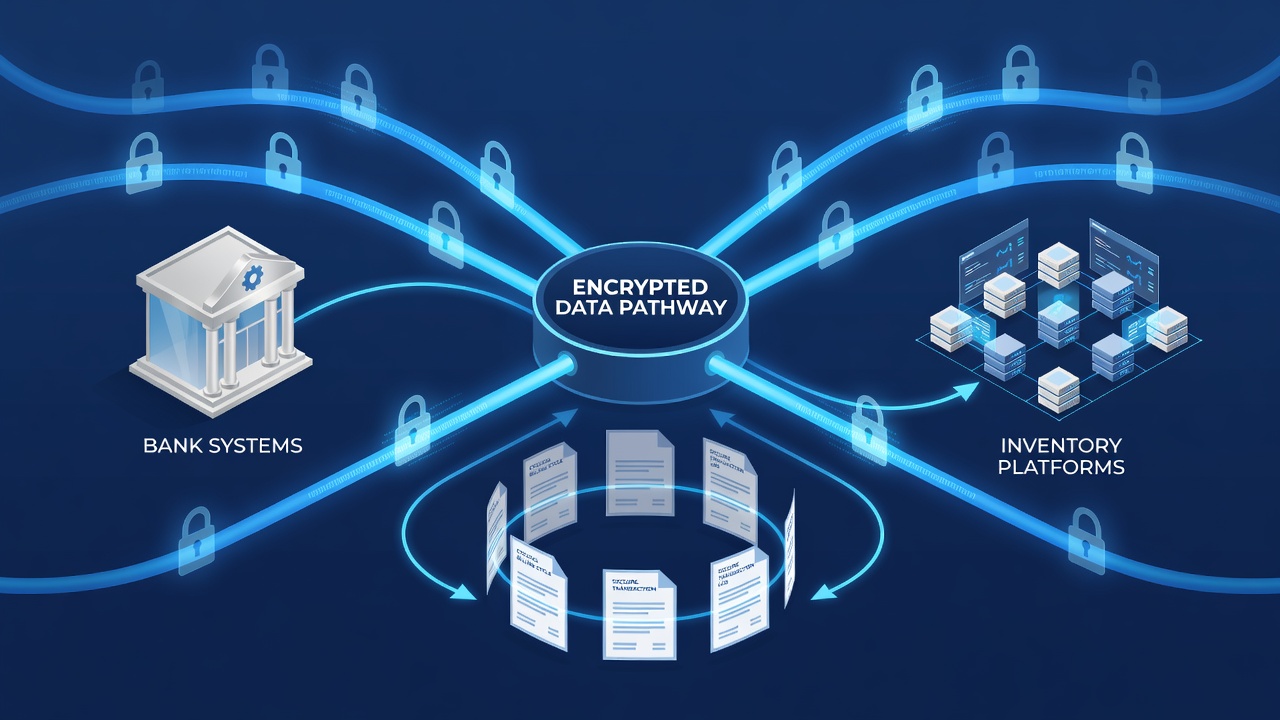
One distribution center in the Midwest integrated its ERP system with bank APIs, and the configuration now processes weekly cyclical billings for perishable goods while logging each step in an immutable audit trail. The approach aligns inventory depletion rates with payment schedules, and it prevents over-ordering by cross-referencing received quantities against billed amounts in real time.
Handling Cyclical Billings Across Retail Networks
Cyclical billings occur when retailers authorize repeated charges to supplier accounts based on consumption patterns, and encrypted pathways ensure each deduction carries verified metadata that matches inventory records. Banks validate these requests against available credit lines before releasing funds, while inventory platforms update stock counts simultaneously to reflect incoming shipments.
Studies from the Federal Reserve show that automated recurring payments in supply chains grew steadily through 2025, and the encrypted linkages contributed to fewer discrepancies between billed amounts and actual deliveries. Retailers in sectors such as apparel and electronics rely on these flows to maintain steady supplier relationships without repeated manual approvals.
Regulatory Requirements and Compliance Layers
US regulations require encryption for any financial data crossing between banks and third-party platforms, and frameworks such as those from the European Central Bank on secure payment messaging offer comparative benchmarks that American operators reference when scaling operations. Compliance teams audit these pathways quarterly to confirm that tokenization and access controls remain intact across all connected systems.
Retailers also maintain logs that demonstrate how each cyclical billing complies with data protection mandates, and this documentation supports examinations by oversight bodies. The combination of technical safeguards and procedural checks creates a closed loop where inventory updates and payment confirmations reinforce one another.
Conclusion
Encrypted data pathways continue to underpin secure cyclical billings by connecting banks with inventory platforms throughout American retail supply chains, and the technical and regulatory elements together sustain reliable automated operations. Retailers that maintain these integrations report consistent alignment between stock movements and financial settlements, which supports broader efficiency in procurement cycles.