How Encryption Layers Safeguard Automated Deductions in American Subscription Retail Networks
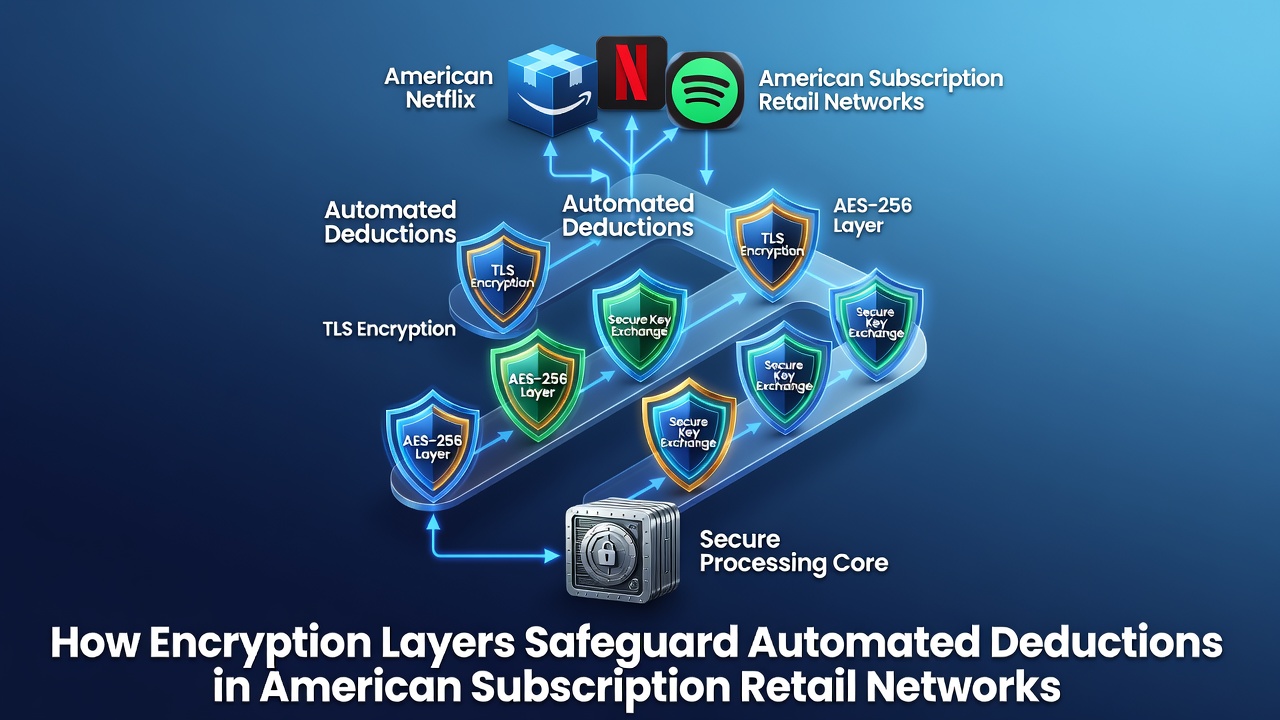
American subscription retail networks rely on automated deductions to process recurring payments for everything from streaming services to meal kits, and encryption forms the backbone of those security measures. Multiple layers of cryptographic protection work together to shield customer financial data during transmission and storage, while companies continue to expand their use of these tools to meet rising transaction volumes.
Core Encryption Mechanisms in Recurring Payment Flows
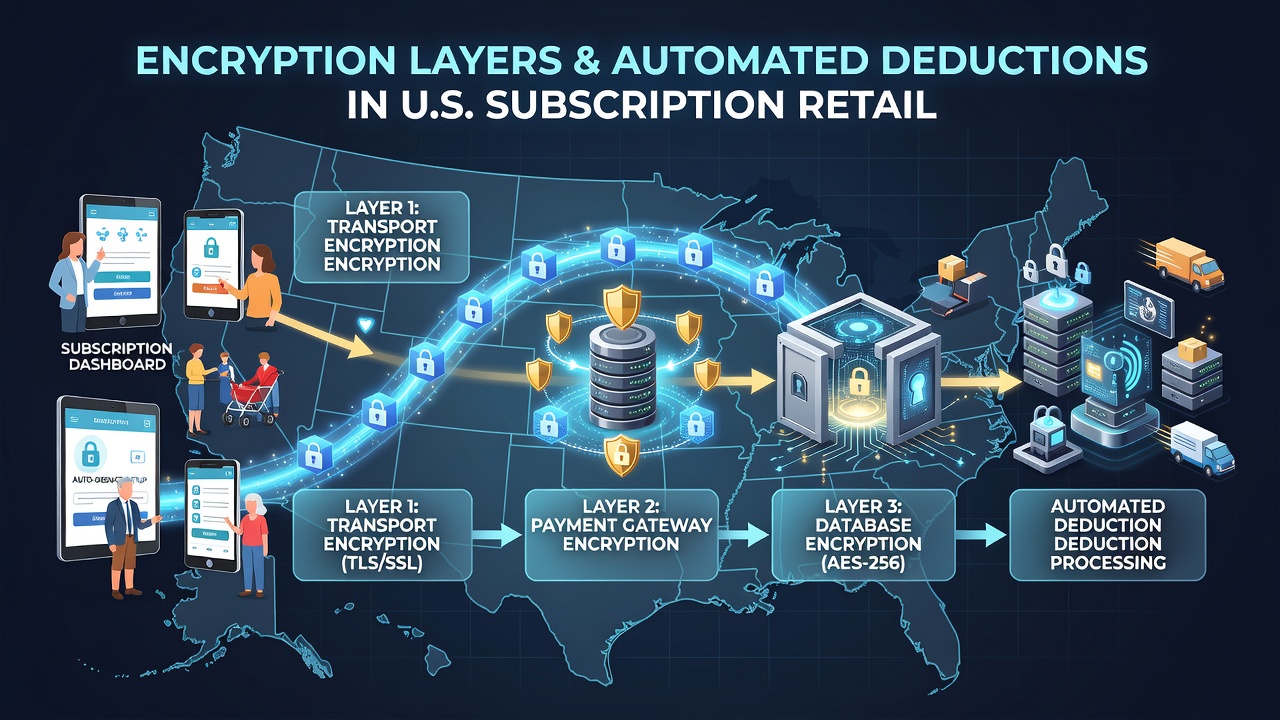
Data moves through several stages when a subscription triggers an automated charge, and each stage applies distinct encryption protocols. Transport Layer Security encrypts information as it travels between the retail platform and payment processors, while Advanced Encryption Standard algorithms secure the data once it reaches storage systems. Researchers have documented how these combined methods reduce exposure points that could otherwise allow unauthorized access during batch processing cycles common in subscription models.
Key exchanges happen before each deduction occurs, and session keys rotate frequently to limit the window of vulnerability. Observers note that this rotation practice aligns with guidelines issued by the National Institute of Standards and Technology, whose cryptographic key management recommendations outline procedures for maintaining forward secrecy across repeated transactions.
Layered Architecture Applied to Subscription Deductions
Retail platforms implement encryption at the application level, the network perimeter, and the database layer simultaneously. Application-level encryption wraps payment details before they leave the customer device, network encryption handles the journey across public infrastructure, and database encryption keeps records protected even if physical media is compromised. Those who've studied payment architectures point out that this multi-tier approach prevents a single breach from exposing full card or bank account details used in recurring billing.
Tokenization sometimes works alongside encryption, yet the cryptographic keys themselves remain isolated in hardware security modules that never enter the main processing environment. Data indicates that separation of duties between key custodians and application developers further strengthens teh overall posture without slowing down high-volume deduction runs.
Regulatory Context and 2026 Developments
Payment Card Industry Data Security Standards require encryption for cardholder data, and American subscription operators must demonstrate compliance during annual audits. In June 2026, updates to related federal guidance on financial data protection are scheduled to take effect, prompting many retailers to review their key rotation schedules and algorithm choices. The European Union Agency for Cybersecurity has published parallel frameworks that some multinational platforms reference when harmonizing operations across borders.
Studies from academic institutions have examined how encryption overhead affects processing latency in automated systems, and findings show that modern hardware acceleration keeps performance impacts minimal even as deduction frequency increases. Retail networks therefore maintain both security and operational efficiency by selecting cipher suites that balance strength with speed.
Practical Integration in Retail Ecosystems
Subscription platforms coordinate with acquiring banks and processors through encrypted application programming interfaces that authenticate each party before any deduction request is accepted. End-to-end encryption ensures that sensitive elements such as routing numbers or card verification values never appear in plaintext logs or monitoring dashboards. Those managing large-scale deployments report that centralized key management platforms simplify oversight across multiple service providers while preserving audit trails required by regulators.
Real-time fraud detection tools operate on encrypted data streams using secure multi-party computation techniques that avoid decrypting the underlying details until a transaction is approved. This method lets systems flag anomalies without creating additional plaintext copies that could become targets.
Conclusion
Encryption layers continue to evolve in response to emerging threats and regulatory expectations within American subscription retail. By maintaining distinct protections for data in motion and at rest, networks reduce the risk surface associated with automated deductions and support the steady growth of recurring revenue models. Ongoing refinements scheduled around mid-2026 reflect the broader commitment to sustaining these safeguards as transaction patterns shift.