How Midwestern Retailers Vet Encryption Protocols When Linking Processor Networks to Inventory Tools for Error-Free Deductions

Retail chains across the Midwest have developed structured approaches to evaluating encryption protocols when connecting payment processor networks with inventory management systems, and these methods focus on maintaining accurate stock deductions during automated transactions. Processors handle the financial side of sales while inventory tools track physical goods movement, yet any mismatch in data security can lead to deduction errors where items appear sold but records fail to align. Observers note that retailers in states such as Illinois, Ohio, and Michigan prioritize protocols that support both real-time verification and long-term data integrity, since these regions feature a mix of large distribution centers and smaller independent outlets that rely on synchronized systems.
Core Criteria for Protocol Assessment
Teams begin by examining protocol strength through established benchmarks that include key length, cipher suites, and resistance to known vulnerabilities, while they cross-reference specifications against guidelines from the National Institute of Standards and Technology. Data shows that AES-256 encryption combined with TLS 1.3 remains a baseline requirement because these standards deliver forward secrecy and efficient performance on legacy hardware still common in Midwest facilities. Retailers also evaluate compatibility with existing inventory software, since many platforms operate on older database structures that demand specific handshake configurations to avoid transmission delays during peak sales periods.
Step-by-Step Vetting Procedures
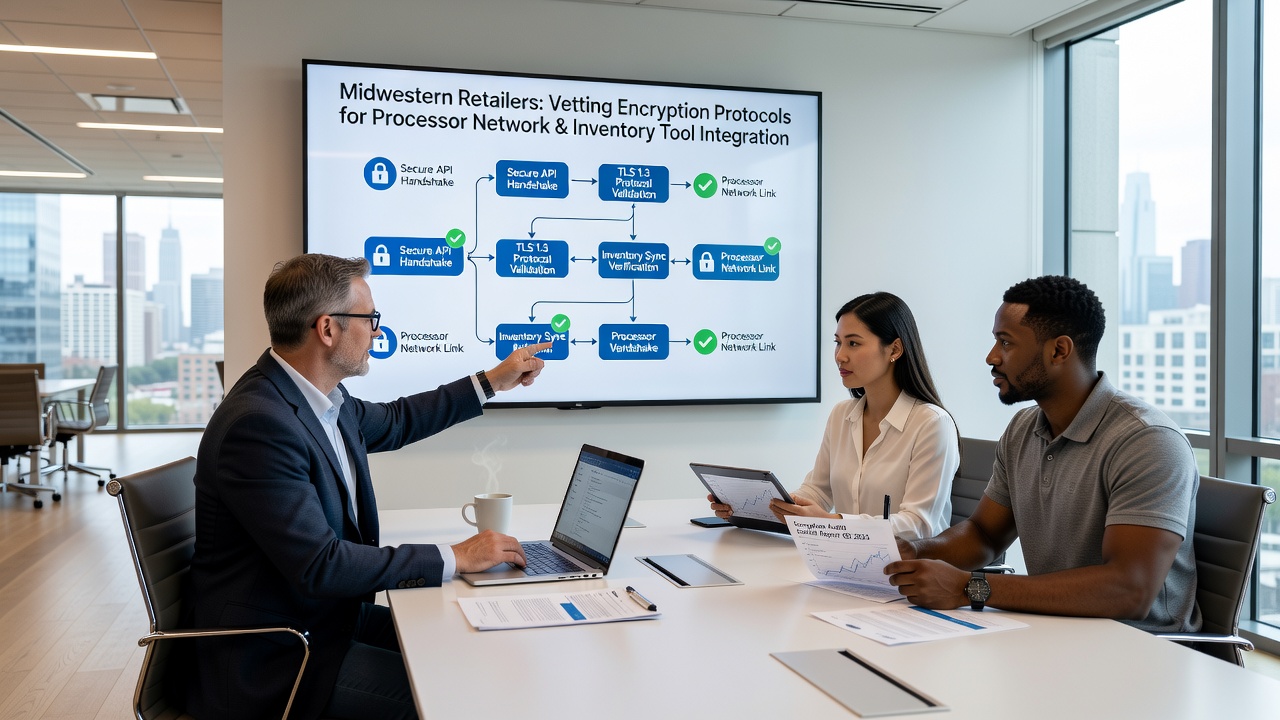
Initial reviews involve documentation audits where vendors submit protocol details for internal security groups to analyze, and these groups test interoperability in controlled environments that simulate live transaction volumes. Subsequent phases include penetration testing conducted by third-party firms, followed by compliance checks against payment card industry requirements that mandate ongoing monitoring of encryption channels. Midwestern operators often extend these tests to include inventory-specific scenarios, such as batch updates triggered by point-of-sale terminals, to confirm that encrypted packets maintain sequence integrity and prevent partial deductions that could distort stock levels.
Regional Factors Influencing Decisions
Supply chain patterns unique to the Midwest introduce additional considerations, because many retailers manage cross-border shipments with Canadian partners and must align encryption standards with varying data residency rules. Figures reveal that organizations in this area frequently adopt hybrid models where protocol selection balances federal guidelines with state-level data breach notification statutes, which differ slightly across the region. What's interesting is how seasonal agricultural and manufacturing cycles affect testing schedules, since inventory spikes during harvest periods require protocols that scale without introducing latency in deduction processes.
Integration Testing and Error Prevention
Once protocols pass initial screening, implementation teams run parallel system trials that compare encrypted data flows against unencrypted benchmarks to measure deduction accuracy. Researchers discovered that even minor mismatches in timestamp synchronization between processor logs and inventory records can generate cumulative errors, particularly when high-volume retailers process thousands of line items daily. Solutions typically incorporate redundant verification layers, such as checksums embedded within encrypted payloads, which allow quick identification of transmission faults before they affect physical inventory counts.
Emerging Standards and Timeline Considerations
Updates scheduled for July 2026 include revised recommendations on post-quantum cryptography from federal agencies, and Midwest retailers have begun preliminary assessments of how these changes might affect current processor-to-inventory linkages. Preparatory work involves mapping existing AES implementations against new algorithm candidates to determine upgrade paths that preserve deduction reliability. Those who've studied this transition note that early adopters gain advantages in contract negotiations with technology providers, since vendors prioritize clients ready to implement forward-compatible encryption frameworks.
Case Examples from the Region
One distribution network operating in Indiana and Wisconsin implemented a phased rollout of updated TLS configurations after discovering that older cipher suites created intermittent packet loss during inventory reconciliation. The process required coordination between the payment processor and the inventory software vendor, yet it resulted in measurable reductions in deduction discrepancies over subsequent quarters. Another example involves a Michigan-based chain that incorporated automated protocol monitoring tools to flag any deviations in encryption strength during routine system updates, which helped maintain consistent performance across multiple store locations.
Conclusion
Midwestern retailers continue refining their encryption vetting processes as processor networks and inventory tools grow more interconnected, and these efforts center on verifiable technical standards that support accurate, error-free deductions. Ongoing collaboration with standards bodies and technology partners provides the foundation for maintaining secure, reliable data exchanges across the region's diverse retail landscape.