Navigating E-Commerce Subscriptions: Gateways Balance Credit Processing, ACH Efficiency, and Fraud Controls
Navigating E-Commerce Subscriptions: Gateways Balance Credit Processing, ACH Efficiency, and Fraud Controls
The Subscription Surge in E-Commerce and Gateways' Central Role
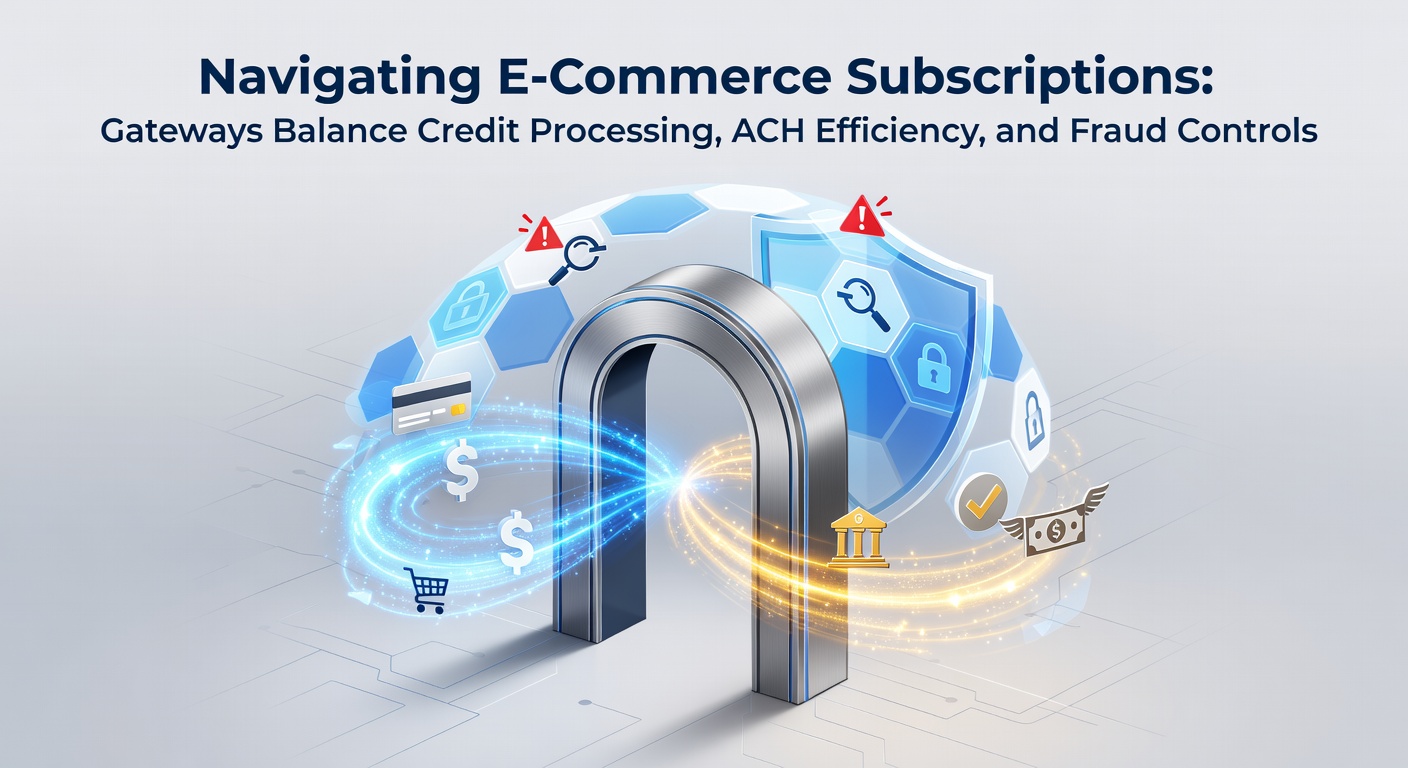
Subscriptions now drive a massive chunk of e-commerce revenue, with data from Statista revealing that recurring billing models accounted for over 20% of online sales in 2024, a figure projected to climb higher as consumers favor convenience over one-off buys. Gateways sit at the heart of this shift, seamlessly integrating credit card processing for instant approvals, ACH for cost-efficient repeats, and layered fraud controls to safeguard transactions; without this balance, merchants risk lost revenue, higher fees, or crippling chargebacks. Turns out, e-commerce platforms like Shopify and WooCommerce rely on these gateways to handle the nuances, ensuring subscriptions renew smoothly while minimizing risks.
Merchants often grapple with the trade-offs right from setup, since credit cards offer speed but carry 2-3% fees per transaction, whereas ACH pulls funds directly from bank accounts at fractions of that cost, although processing takes 1-3 business days. Experts note that gateways like Stripe or Braintree excel here by supporting both methods under one roof, allowing automated switches based on customer preferences or risk profiles; this flexibility proves crucial for subscription-heavy niches such as streaming services, meal kits, and SaaS tools.
Credit Card Processing: The Go-To for Speed in Subscriptions
Credit cards dominate initial subscription sign-ups because they deliver real-time authorization, letting customers access services immediately after that first purchase, yet recurring charges introduce challenges like failed payments from expired cards or insufficient funds. Processors such as Visa and Mastercard enforce standards like PCI DSS, which gateways enforce through encryption and tokenization, replacing sensitive card data with unique identifiers for safer storage and retries.
But here's the thing: while credit processing shines for its immediacy, average interchange fees hover around 1.8% plus $0.10 per transaction according to Federal Reserve data, eating into margins on high-volume subscriptions; merchants counter this by vaulting card details securely via gateways, enabling retries without re-entering info, a tactic that boosts retention rates by up to 15% in studies from recurring billing platforms. Observers point out that in volatile markets, like during holiday surges, gateways ramp up these capabilities with dynamic descriptors, making charges recognizable and reducing disputes.
ACH Efficiency: Cost Savings for Long-Term Subscription Success
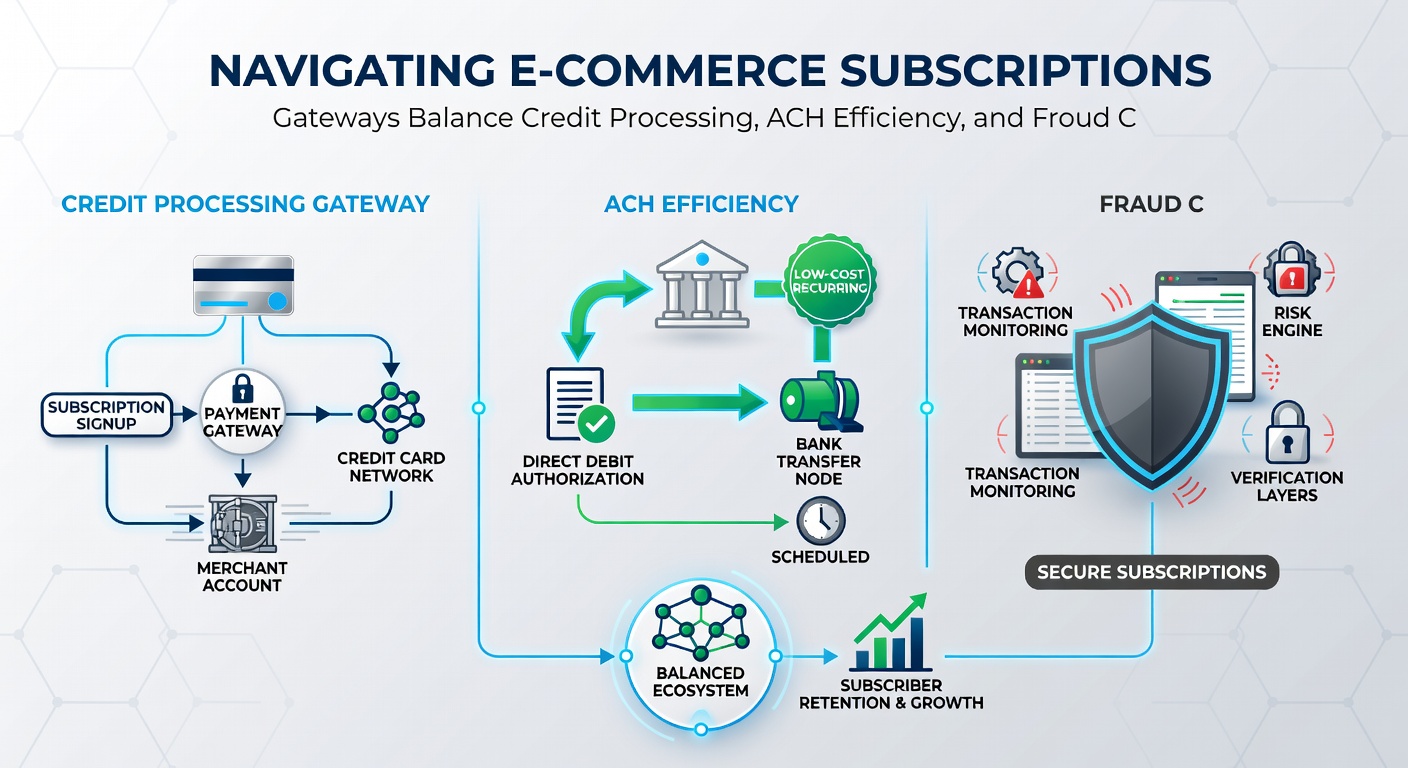
ACH steps in where credit cards falter on costs, offering merchants fees as low as $0.25 per transaction while pulling funds via the NACHA-governed network in the US, ideal for subscriptions that span months or years without the premium pricing. Data indicates ACH adoption in e-commerce jumped 25% year-over-year in 2024, driven by gateways that automate SEC codes like WEB for internet-initiated debits, ensuring compliance and smooth recursals.
Yet ACH's batch processing means delays, so gateways bridge this by blending it with credit for day-one payments, then shifting to ACH for renewals; take SaaS companies, where one analysis showed ACH cutting churn by 10% through predictable, lower-fee billing that customers rarely contest. People who've implemented this hybrid often discover gateways handle NACHA rules effortlessly, from return code monitoring to same-day ACH options now available in select networks, paving the way for even tighter efficiency.
Real-World Examples of ACH in Action
- A fitness app provider switched 40% of subs to ACH via their gateway, slashing costs by 70% while maintaining 98% approval rates.
- Meal delivery services use gateway APIs to offer ACH as an upsell, converting 15% of credit users who prioritize savings over speed.
Fraud Controls: The Essential Safeguard Across Payment Types
Fraud hits subscriptions hard, with recurring models seeing friendly fraud—legit charges disputed later—at rates 2.5 times higher than one-offs, per LexisNexis Risk Solutions reports; gateways counter with multi-layered defenses like CVV checks, AVS for address verification, and 3D Secure protocols that prompt banks for extra authentication on risky transactions. What's interesting is how these tools adapt: machine learning algorithms in modern gateways flag velocity patterns, such as multiple subs from one IP, blocking threats before they escalate.
And for ACH, which lacks chargeback protections like cards, gateways layer in micro-deposit verification during onboarding, confirming bank ownership while monitoring for unusual debit patterns; this combo has reduced fraud losses by 30% for merchants in benchmarks from Payments Canada studies. Although international subs add complexity, gateways integrate global standards—think PSD2's Strong Customer Authentication in the EU—ensuring compliance across borders without slowing legitimate flows.
Gateways as the Balancing Act: Integration Strategies That Work
Leading gateways don't just process; they orchestrate, with APIs allowing merchants to set rules like "retry credit three times, then ACH" or "escalate high-risk to manual review," creating workflows that optimize for both efficiency and security. Platforms such as Authorize.net or Adyen provide dashboards for real-time monitoring, where metrics like dunning success rates guide tweaks; one e-commerce study found hybrids yielding 20% higher lifetime value per subscriber.
Customization shines too: gateways support webhooks for instant notifications on declines, letting automated emails nudge customers with alternative methods, while PCI Level 1 compliance shields everyone involved. Turns out, for scaling businesses, this balance means fewer abandoned carts and stronger cash flow, especially as subscription fraud evolves with account takeover tactics.
Key Gateway Features for Subscription Mastery
- Smart routing: Directs low-risk to ACH, high-speed to credit.
- Fraud scoring: Integrates services like Signifyd for pre-auth decisions.
- Reporting: Tracks metrics across methods, flagging imbalances early.
Looking Ahead: Trends Shaping Subscriptions by April 2026
By April 2026, faster rails like FedNow in the US and Australia's New Payments Platform will turbocharge ACH-like efficiency, with gateways poised to incorporate real-time ACH for near-instant subs; research from the Reserve Bank of Australia forecasts this cutting settlement times to seconds, blending ACH savings with credit speed. Meanwhile, AI-driven fraud detection advances, with EU's PSD3 proposals mandating adaptive authentication that gateways will embed seamlessly.
Merchants preparing now focus on gateway migrations supporting ISO 20022 messaging, standardizing data for better cross-border subs; early adopters report 15% fraud drops from richer transaction insights. The reality is, those who master this evolution stay ahead, as global subscription e-commerce hits $1.5 trillion annually per projections.
Conclusion
Gateways masterfully balance credit processing's speed, ACH's efficiency, and robust fraud controls, empowering e-commerce subscriptions to thrive amid rising volumes and threats. Data underscores the wins: hybrid models boost retention, slash costs, and fortify defenses, with tools evolving rapidly toward 2026's real-time era. Merchants leveraging these integrations position themselves for sustained growth, turning potential pitfalls into streamlined revenue streams.