The Mechanics Behind Synchronizing Bank Feeds With Digital Checkouts For Automated Charge Handling In Retail Setups
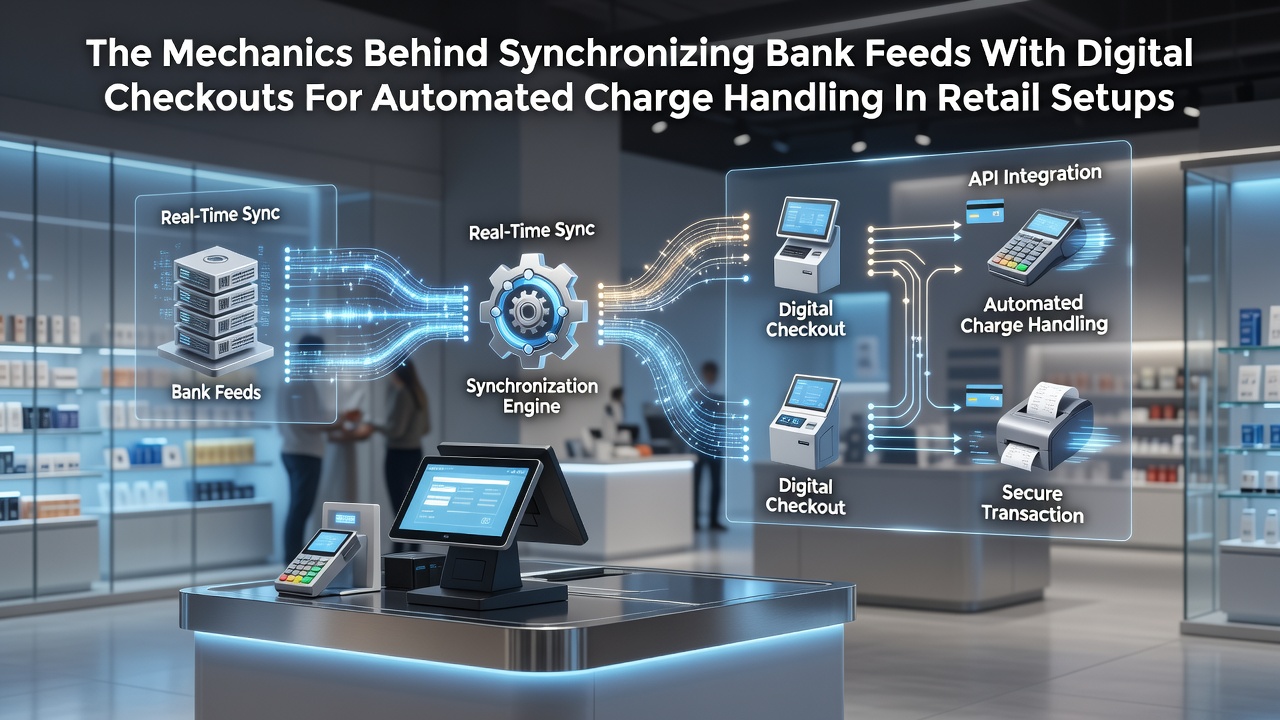 Retail operations rely on precise coordination between banking institutions and point-of-sale platforms to manage automated charges without manual intervention. Bank feeds transmit transaction data directly from financial institutions into retail software systems while digital checkouts capture customer payment details at the moment of purchase. This synchronization allows charges to process automatically once verification completes through established protocols. Data exchange begins at the banking layer where institutions push account activity through secure application programming interfaces. Retail platforms receive these feeds in structured formats that include timestamps, account identifiers, and transaction amounts. Checkout systems then match incoming feed records against pending orders stored in the merchant database. Matching algorithms compare unique reference codes generated during the initial checkout to confirm alignment between the bank record and the retail transaction. Multiple data formats support this exchange including standard ACH files and real-time payment messages. Retail systems parse these formats using middleware that converts raw bank data into usable fields for the checkout engine. Once parsed the system triggers charge authorization sequences that route requests back through payment processors for final settlement. Observers note that timing plays a critical role because delays in feed delivery can create mismatches between expected and actual charge amounts.
Core Integration Layers
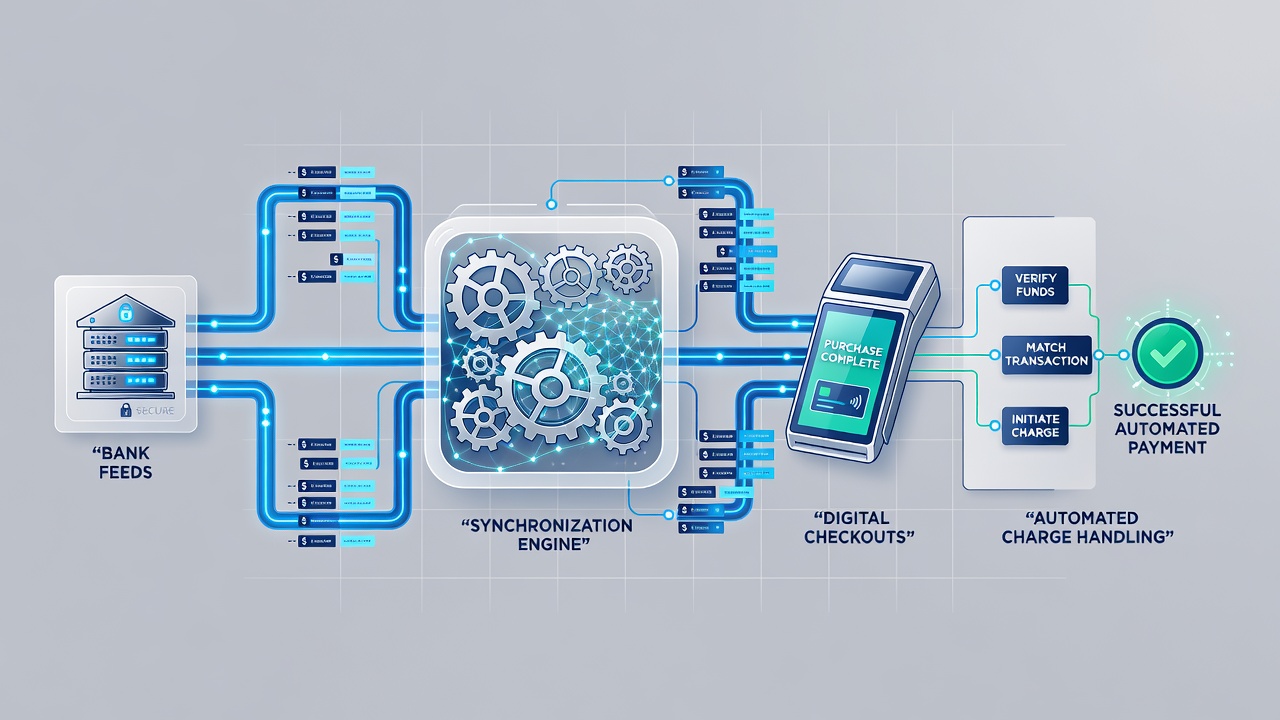
Three primary layers handle the synchronization workload. The banking interface layer manages authentication and data encryption between the financial institution and the retail server. The middleware translation layer converts proprietary bank formats into standardized retail data structures. The checkout application layer executes charge logic once matched records arrive from the feed.
Each layer operates with its own set of validation checks. Banking interfaces verify digital signatures and session tokens before releasing data. Middleware confirms field completeness and data type consistency. Checkout applications cross-reference customer identifiers against stored profiles to ensure charges apply to the correct accounts. When all layers report successful validation the charge executes without further manual review.
Real-Time Versus Scheduled Processing
Some retail setups favor continuous feed monitoring that processes charges within seconds of bank data arrival. Others schedule batch pulls at fixed intervals such as every fifteen minutes or hourly. Real-time flows demand persistent connections and higher server capacity whereas scheduled batches allow for lower resource usage during off-peak hours.
June 2026 brings updated specifications from several payment networks that standardize message headers used in both real-time and batch scenarios. These specifications require additional metadata fields that include originating device identifiers and expected settlement windows. Retail platforms upgrading their middleware ahead of the June 2026 deadline have reported smoother matching rates during initial testing phases.
Handling Exceptions and Record Reconciliation
Automated charge handling encounters exceptions when feed records lack complete reference codes or when timing discrepancies arise between checkout initiation and bank posting. Reconciliation engines flag these cases for review while continuing to process clean records. Retail systems maintain audit logs that record every match attempt including failed attempts and subsequent resolutions.
According to Federal Reserve payment system documentation consistent use of standardized reference fields reduces exception rates across automated environments. European Payment Council guidelines similarly emphasize structured identifiers that enable faster automated reconciliation between bank feeds and merchant records. Systems that adopt these identifiers experience fewer manual interventions during daily operations.
Database Architecture Supporting Continuous Sync
Retail databases store pending charges in temporary tables that accept incoming feed data through direct inserts. Indexing on reference fields and timestamps speeds lookup operations during matching cycles. Once a match succeeds the system moves the record to a settled transactions table and updates inventory and customer ledgers accordingly.
Database triggers can initiate charge posting immediately upon successful feed insertion. These triggers operate within transaction boundaries that roll back changes if downstream authorization fails. Observers report that well-designed trigger logic prevents partial updates that could leave customer accounts in inconsistent states.
Security Controls Embedded in the Flow
Encryption protects data in transit between banks and retail servers while tokenization replaces sensitive account numbers within the retail environment. Access controls limit which internal services can read or write to feed ingestion tables. Monitoring tools track unusual patterns such as sudden spikes in unmatched records that may indicate configuration drift.
Conclusion
The mechanics of bank feed synchronization with digital checkouts rest on layered data exchange, precise matching logic, and structured exception handling. Retail setups that maintain consistent reference codes and adopt updated network specifications position themselves for reliable automated charge processing. Continued refinement of middleware and database triggers supports the growing volume of recurring retail transactions across multiple payment channels.