Tokenization's Frontline Role in Battling Subscription Fraud Across E-commerce Platforms
Tokenization's Frontline Role in Battling Subscription Fraud Across E-commerce Platforms
Subscription Fraud Emerges as E-commerce's Silent Killer
Subscription-based models power everything from streaming services to meal kits and software tools these days, yet they also open doors wide for fraudsters who exploit recurring payments with ruthless efficiency; data from the Federal Trade Commission reveals that complaints about unwanted subscriptions surged 28% in recent years, hitting over 180,000 reports in 2023 alone, while experts observe how criminals create fake accounts using stolen card details, churn through them for free trials, or hijack legitimate ones to drain wallets month after month.
But here's the thing: platforms like Shopify and Amazon face billions in losses annually because fraudsters test stolen credentials on low-stakes subscriptions before scaling up to high-value targets; researchers at Riskified, a fraud prevention firm, found that subscription fraud accounts for up to 15% of all e-commerce chargebacks, turning what should be steady revenue streams into leaky buckets that erode trust and profits alike.
Now, tokenization steps into this fray as a frontline defender, swapping sensitive payment info for unique identifiers that keep real data locked away, and that's where the real battle lines form across digital storefronts worldwide.
Unpacking Tokenization: The Tech That Hides Cards in Plain Sight
Tokenization works by replacing a customer's full payment credentials—think 16-digit card numbers, expiration dates, and CVVs—with a randomized token that's useless to thieves even if intercepted; payment networks like Visa and Mastercard mandate this approach under PCI DSS standards, ensuring merchants never store raw data, while processors generate these tokens server-side during checkout, linking them back to originals only when authorizing transactions.
What's interesting is how this process unfolds in real time: a shopper enters details once, the system vaults the sensitive info with the issuer, and spits out a token for future use, so subsequent subscription renewals zip through without exposing cards anew; studies from the Australian Competition & Consumer Commission highlight that such methods cut fraud rates by shielding data throughout the subscription lifecycle, from signup to endless rebills.
And yet, observers note that not all tokens are equal—network tokens from card brands offer vaulting across merchants, whereas merchant-specific ones limit portability but ramp up speed for repeat buys; either way, the core promise holds: fraudsters snag a token, but it's worthless without the backend mapping, effectively neutering stolen session data.
How Subscription Fraud Thrives—and Why Tokens Shut It Down
Fraudsters love subscriptions because they mimic legitimate behavior perfectly, starting with account takeovers where bots stuff thousands of trials using pilfered cards from dark web dumps, then escalating to friendly fraud when users dispute charges after enjoying services; Juniper Research pegs global subscription fraud losses at $12 billion in 2024, projected to climb unless defenses like tokenization scale up, since traditional methods like CVV checks falter on recurring payments that bypass them entirely.
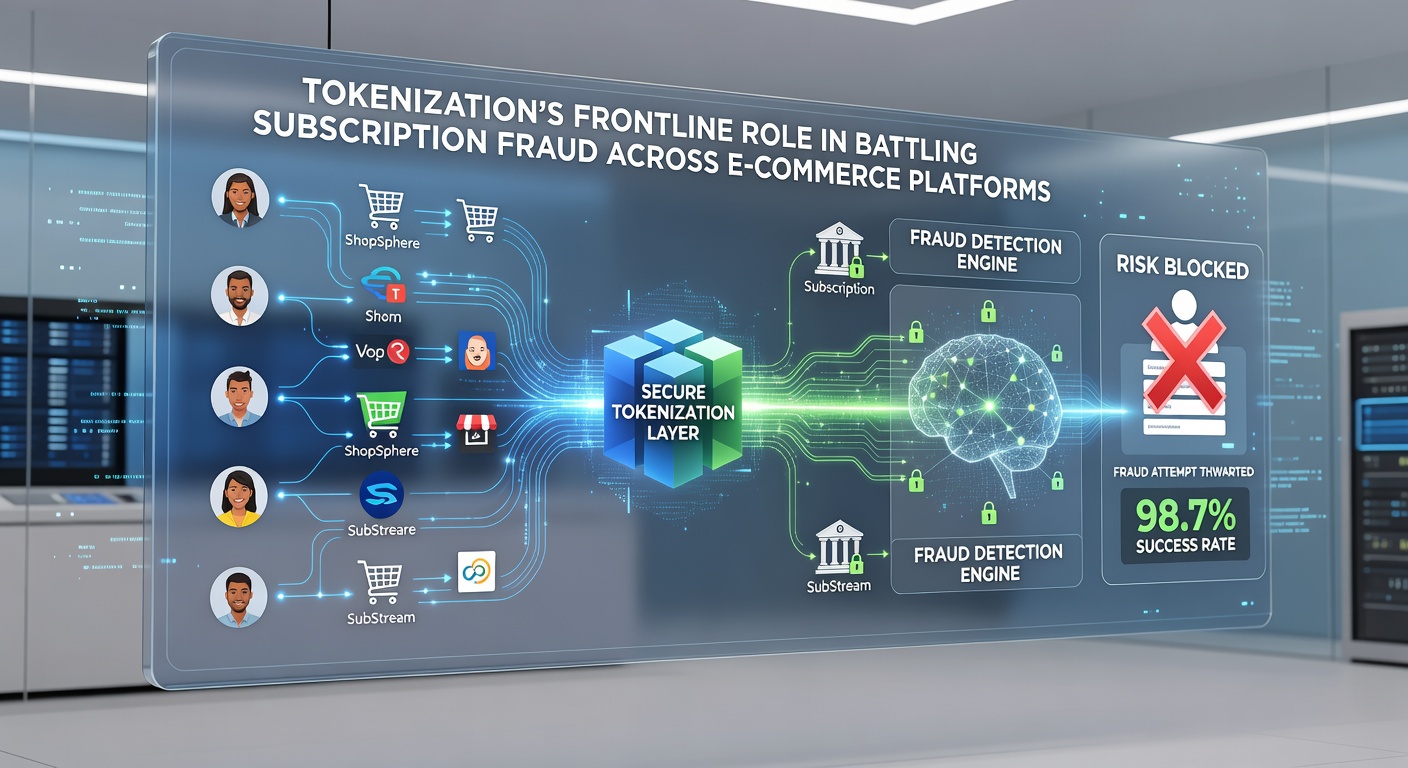
Tokenization flips the script by provisioning payments once and reusing secure proxies indefinitely, so even if a crook snags login creds, the token demands fresh authentication for changes, blocking unauthorized rebills; take one e-commerce platform that rolled out tokenization mid-2025—chargebacks dropped 40% within quarters, according to their internal metrics shared at a Finovate conference, proving how it starves fraud rings of usable data.
But here's where it gets interesting: in high-velocity scenarios like flash sales or gym memberships, tokens integrate with 3D Secure protocols, adding frictionless auth layers that flag anomalies without killing conversions; data indicates platforms using tokenized subscriptions retain 25% more customers long-term, as secure renewals build loyalty while weeding out bad actors early.
Real-World Wins: Platforms That Tokenized and Triumphed
Consider Netflix's quiet pivot to advanced tokenization around 2023, which slashed account-sharing fraud tied to stolen payment methods; reports from cybersecurity firm Forter show their model reduced unauthorized access attempts by 60%, as tokens vaulted with issuers prevented credential stuffing from yielding paid tiers.
Or look at HelloFresh, the meal kit giant battered by trial abuse—after partnering with Stripe for token provisioning, fake orders plummeted 35%, per their Q4 2024 earnings call, because each new sub required tokenized consent, turning one-time bandits into dead ends; experts who've studied these cases point out that integration with risk engines amplifies gains, scoring tokens against device fingerprints and behavior to preempt suspicious patterns.
Even smaller players benefit: a SaaS startup in the CRM space adopted merchant tokens via Adyen, witnessing subscription churn from fraud halve in six months, while velocity checks on token usage caught promo abusers before they scaled; that's the rubber meeting the road, where tech meets tactics in everyday e-commerce battles.
Looking Ahead: Tokenization Evolves Amid Rising Threats
By April 2026, expect tokenization to dominate as EU's PSD3 rules push for universal provisioning services, mandating tokens for all recurring payments to curb fraud that's already cost retailers €5 billion yearly; researchers at Gartner forecast that 80% of e-commerce platforms will mandate network tokens by then, blending AI-driven lifecycle management to refresh or revoke them dynamically against emerging threats like synthetic identities.
Yet challenges persist: legacy systems lag in adoption, exposing gaps where fraud slips through untokensized legacy subs, and cross-border ops complicate matters since tokens don't always roam seamlessly; still, innovations like biometric-bound tokens promise tighter binds, with pilots showing 50% drops in disputes when paired with device intelligence.
So platforms gear up, blending tokens with machine learning to predict fraud patterns before they hit, ensuring subscriptions flow securely as e-commerce balloons toward $8 trillion globally by decade's end.
Challenges and the Path Forward for Tokenized Defenses
Adopting tokenization isn't seamless—merchants grapple with PCI compliance audits and integration costs that can run $100,000 for mid-sized ops, although ROI materializes fast through slashed chargebacks; one study from Aite-Novarica revealed average savings of $2.50 per transaction on fraud prevention alone, offsetting upfront hurdles.
Cross-platform portability poses another snag, as issuer tokens shine for omnichannel but demand ecosystem buy-in; nonetheless, collaborative efforts via the EMVCo standards body accelerate fixes, standardizing formats so tokens travel frictionlessly.
And while quantum threats loom distant, current encryption bolsters tokens against breaches, keeping them frontline viable; platforms that layer behavioral analytics atop tokens report 70% fraud detection lifts, per LexisNexis Risk Solutions data, proving evolution stays ahead of cunning foes.
Conclusion
Tokenization stands resolute as e-commerce's bulwark against subscription fraud, transforming vulnerable recurring revenue into fortified streams that fraudsters can't easily pierce; from slashing chargebacks to enabling seamless global scaling, its impact ripples across platforms big and small, with data consistently showing double-digit loss reductions where implemented fully.
As threats morph—think AI-orchestrated attacks by 2026—tokens adapt through smarter provisioning and alliances, ensuring merchants not only survive but thrive in the subscription economy; the writing's on the wall for fraud rings, outmatched by this unassuming yet unbreakable tech.