US Retailers' API Integrations: Balancing ACH Efficiency with Credit Card Verification in Automated Billing Workflows
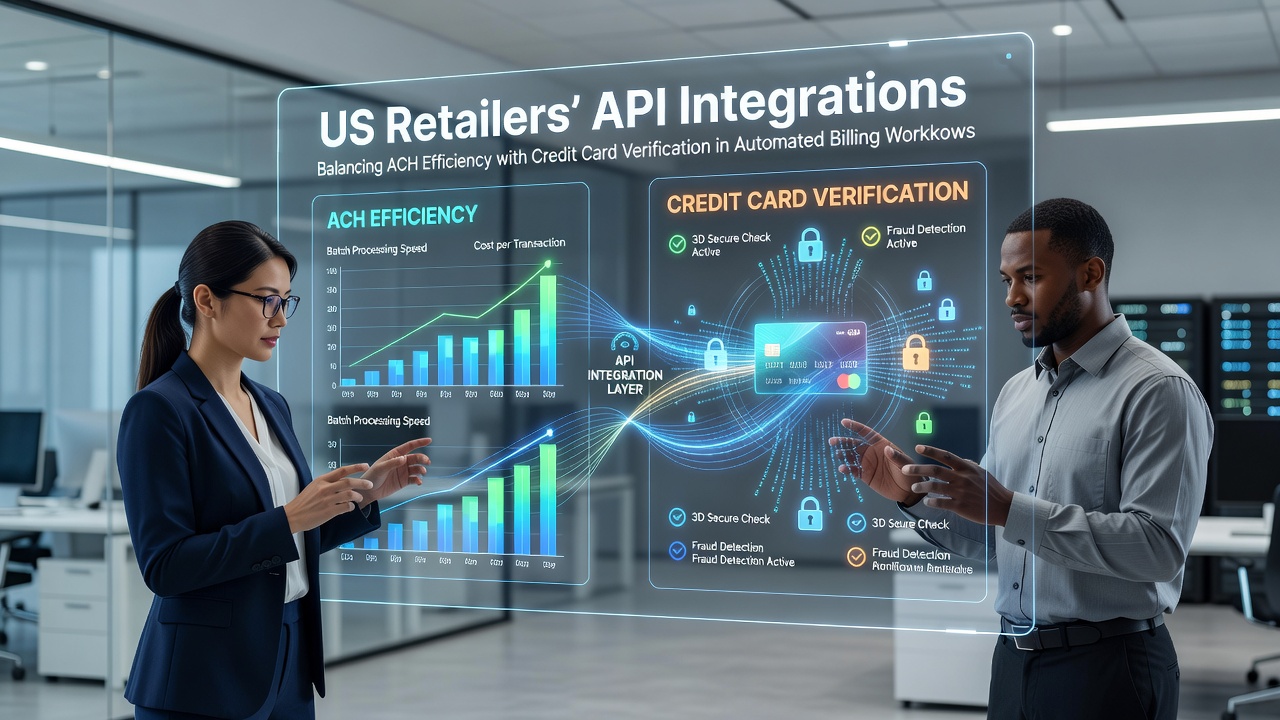
US retailers have expanded their use of application programming interfaces to connect banking networks with digital billing platforms, which allows automated handling of recurring charges through both ACH transfers and credit card transactions. These integrations support high-volume subscription models while addressing the distinct requirements of each payment type, including settlement speed, cost structures, and identity checks.
Core Components of Retail API Setups
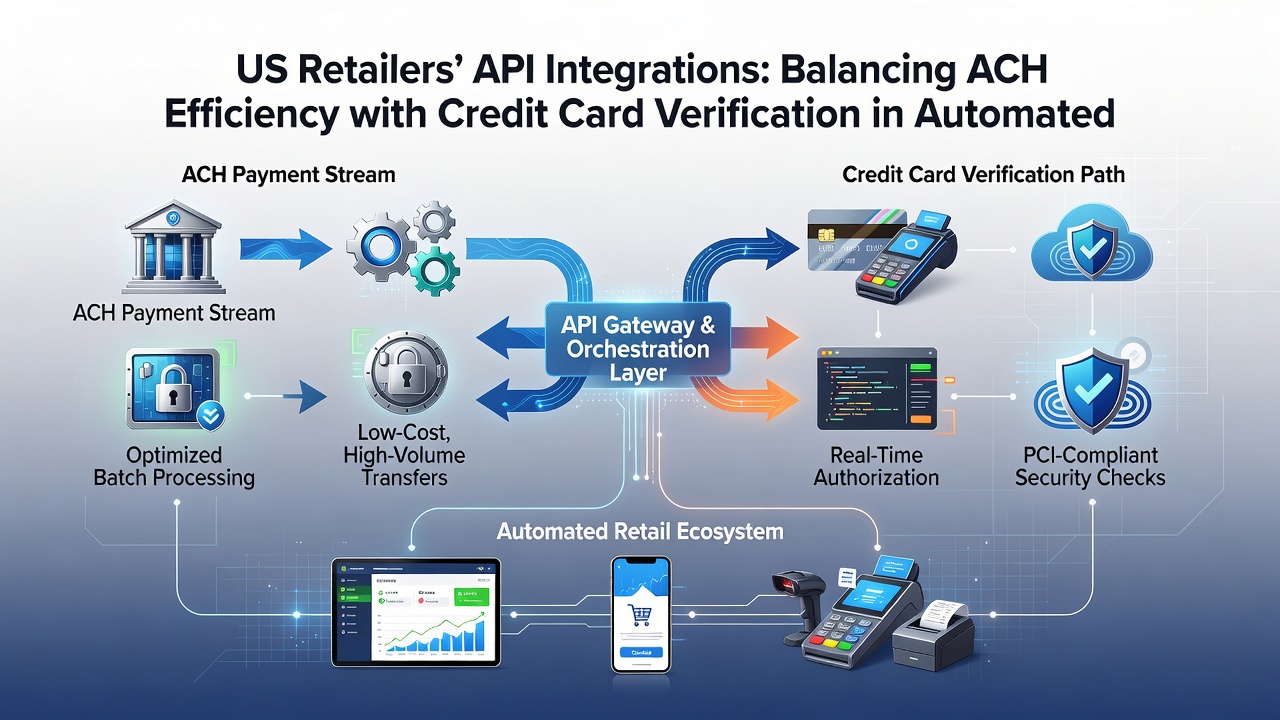
Retail systems connect to payment processors through standardized APIs that route ACH requests to the Federal Reserve's network and credit card authorizations to card networks such as Visa and Mastercard. Developers configure endpoints to separate transaction streams, routing low-cost ACH debits for routine billing cycles while reserving card channels for initial verifications or higher-value adjustments. This separation reduces per-transaction fees on repeat charges, since ACH typically carries lower costs than card interchange rates.
According to data from the Federal Reserve, ACH volume reached record levels in recent years, driven largely by recurring payment use cases across e-commerce and service sectors. Retail platforms incorporate NACHA operating rules into their API logic to ensure batch processing complies with same-day settlement options introduced in prior updates. Credit card verification layers, meanwhile, rely on tokenization services that replace card details with unique identifiers before storage, limiting exposure during automated retries.
Verification Protocols in Mixed Workflows
Automated billing sequences often begin with a credit card authorization to confirm account validity and available funds, followed by a switch to ACH for subsequent deductions once the customer relationship stabilizes. APIs enforce this sequence by triggering micro-deposit verifications or instant account checks through third-party services before scheduling ACH pulls. Such steps help prevent failed transactions that could disrupt revenue streams in subscription environments.
Observers note that retailers managing both methods through unified dashboards gain visibility into failure rates and retry logic. When an ACH debit returns as NSF, the system can fall back to a stored card token for immediate capture, maintaining continuity without manual intervention. Data shows these fallback mechanisms reduce involuntary churn in recurring revenue models.
July 2026 Developments in API Standards
In July 2026, updates to NACHA guidelines emphasized enhanced API security requirements for batch submissions, prompting retailers to adopt stronger encryption and real-time monitoring within their integration layers. These changes align with broader industry shifts toward open banking frameworks, where verified account data flows directly between banks and merchant platforms. European Central Bank reports on similar initiatives highlight parallel efforts to standardize API access across regions, offering US operators models for cross-border subscription services.
Security and Compliance Considerations
Payment Card Industry Data Security Standards continue to shape how retailers structure their credit card handling within API calls, requiring segmentation of card data from ACH routing information. Token vaults managed by gateways isolate sensitive details, while ACH transactions reference bank routing numbers validated through external databases. Retailers that maintain separate compliance tracks for each channel report fewer audit findings during annual reviews.
Those who've studied integration patterns across mid-sized US chains find that modular API designs allow independent scaling of ACH volume without overloading card authorization queues. This modularity proves useful during peak billing periods when transaction spikes occur across both channels simultaneously.
Practical Integration Patterns
Many retail platforms embed decision engines inside their billing APIs that evaluate customer history before selecting a payment rail. New accounts trigger card verification first, whereas established profiles shift to ACH after a set number of successful cycles. Such logic reduces overall processing costs while preserving verification strength at onboarding. Industry reports from sources like the Bank for International Settlements document similar patterns in automated payment environments worldwide.
Conclusion
Retailers continue refining their API architectures to maintain efficient ACH processing alongside reliable credit card checks in recurring billing systems. These efforts center on clear routing rules, token management, and adherence to evolving network standards that support both payment types without compromising operational controls.